
-
Informations +968 793 793 79
-
Sales Department +968 99 26 36 46
-
United Arab Emirates +971 526 324 552
Auxiliary Relays
Industrial Auxiliary Relays for Control & Circuit Expansion
Auxiliary relays expand control circuits by providing additional switching contacts in industrial panels. In simple terms, they increase the number of available outputs without overloading primary devices. As a result, engineers can manage multiple signals safely and efficiently.
In automation systems, these relays support interlocking, signal duplication, and circuit isolation. While primary relays handle main switching tasks, auxiliary units extend existing control logic. Therefore, they play a vital role in structured panel design and complex automation systems.
At UniGulfSupply, we supply reliable industrial auxiliary relays for control panels across Oman & UAE. In addition, our range delivers stable coil performance and consistent contact switching. Moreover, compact modular designs simplify installation on DIN rails, especially in space-constrained panels.
These relays are commonly integrated with Control Relays, Timer Relays, and Contactors. Consequently, they form a key part of coordinated automation systems.
Types of Auxiliary Relays Available
This category typically includes:
- Plug-in auxiliary relays
- Multi-pole relay units
- DIN rail mounted relays
- Interface relays for signal isolation
- Contact expansion relays
Each type increases switching flexibility. For example, multi-pole relays allow several circuits to operate simultaneously from a single control signal. As a result, panel wiring becomes more efficient and scalable.
Why Auxiliary Relays Are Important
Industrial panels often require additional contact points to support complex logic. However, without proper expansion, primary relays may become overloaded. As a result, system reliability can decrease.
Using high-quality auxiliary relays helps you:
- expand contact capacity safely
- support interlocking functions
- improve signal isolation
- increase panel flexibility
- simplify future upgrades
Therefore, these relays remain essential in scalable and future-ready automation systems.
Typical Applications
Technicians use auxiliary relays in:
- motor control panels
- PLC interface systems
- process automation cabinets
- safety interlock circuits
- machine control assemblies
Because modern systems require signal duplication and isolation, these relays provide a practical and reliable solution. In addition, they help simplify troubleshooting during maintenance.
Selecting the Right Auxiliary Relay
When selecting an auxiliary relay, consider:
- number of contact poles
- contact configuration (NO / NC)
- coil voltage rating
- mounting style
- switching capacity
For instance, plug-in models allow quick replacement during servicing. On the other hand, DIN rail versions provide compact and organized panel layouts. Additionally, choosing the correct rating ensures safe long-term performance.
FAQs
What is an auxiliary relay used for?
It expands control circuits by providing additional contact points for switching.
How is it different from a control relay?
A control relay performs primary switching. In contrast, an auxiliary relay extends switching capacity and supports control logic.
Can these relays be used in PLC panels?
Yes. In fact, they are commonly used to duplicate PLC output signals and improve circuit flexibility.

60.13 Electromagnetic Relay | Finder
Original price was: ر.ع.10.500.ر.ع.9.500Current price is: ر.ع.9.500.
Intermediate Relay Switch | MY2NJ MY3NJ MY4NJ
Price range: ر.ع.6.500 through ر.ع.8.400Select options This product has multiple variants. The options may be chosen on the product page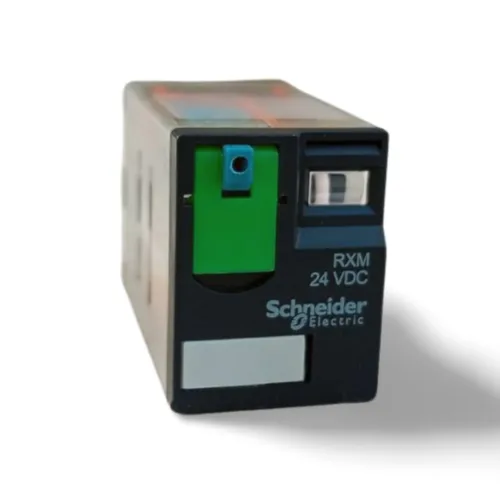
Miniature plug-in relay 6A 24VDC | RXM4AB1BD (Schneider)
ر.ع.2.800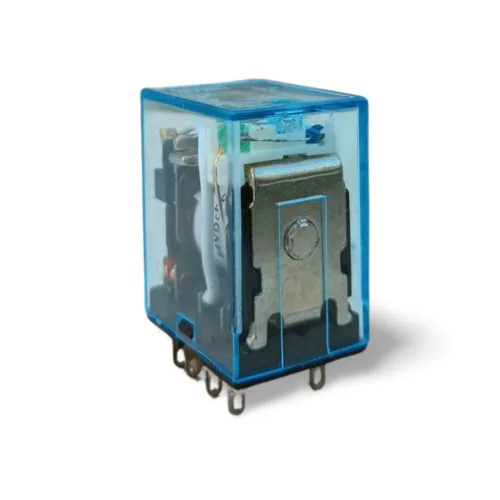
Relay MY2NJ | 24VDC 14Pin (Omron)
ر.ع.2.400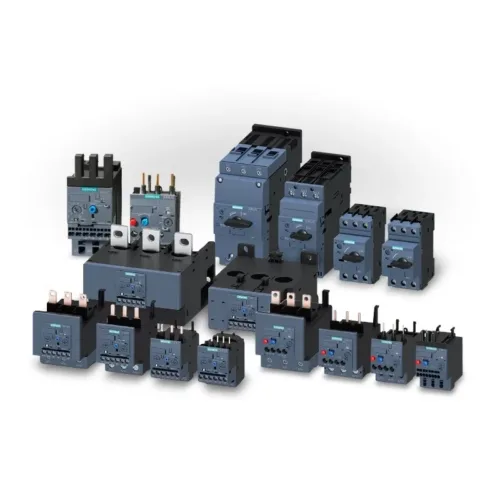
Relays Auxiliary NC | 3TX4001-2A SIEMENS
Original price was: ر.ع.45.000.ر.ع.42.500Current price is: ر.ع.42.500.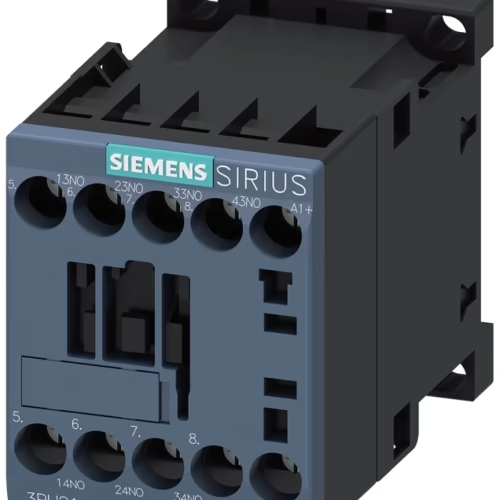
Siemens 3RH21401KB40 – 10A 24V DC 4NO BUILT IN SUPRESSOR DIODE
Original price was: ر.ع.85.000.ر.ع.83.500Current price is: ر.ع.83.500.