
-
Informations +968 793 793 79
-
Sales Department +968 99 26 36 46
-
United Arab Emirates +971 526 324 552
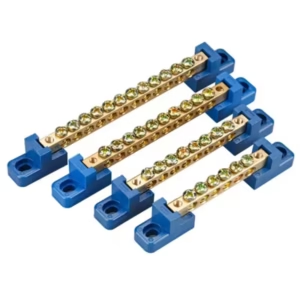
Distribution Blocks
Terminal Blocks
Reliable Terminal Blocks for Electrical Wiring Connections
Terminal blocks provide secure connection points that allow electricians to join and organize wires inside electrical panels and distribution systems. These components help maintain structured wiring while ensuring reliable electrical contact between conductors.
Engineers and electricians also refer to these components as terminal connectors, wiring terminals, or DIN rail terminals, depending on the mounting method and electrical application.
At UniGulfSupply, we supply durable wiring connection solutions designed for industrial control panels, automation systems, and electrical installations across Oman and the UAE. Therefore, engineers and technicians rely on these components to build safe and serviceable electrical systems.
Terminal Blocks in Electrical Control Systems
Terminal blocks often work together with other electrical distribution and protection components inside control panels. Therefore, engineers frequently integrate them with related devices that support safe power management and organized wiring layouts.
For example:
• Distribution blocks divide incoming power into several outgoing circuits within electrical panels.
• Ground bars provide secure grounding connections that improve electrical safety.
• Busbars distribute electrical current across multiple circuits in high-power installations.
• Circuit breakers protect circuits from overloads and short circuits.
Together, these components create organized, reliable, and safe electrical installations.
Types of Terminal Blocks Available
Different electrical systems require different connection methods and conductor capacities. Therefore, manufacturers design terminal blocks in several configurations to meet various installation requirements.
Screw Terminal Blocks
Screw terminal blocks secure conductors using mechanical screw clamps. As a result, they provide strong and stable wire connections that technicians can easily inspect and maintain.
Spring Clamp Terminal Blocks
Spring clamp designs hold conductors using constant spring pressure. Consequently, technicians can install wires faster while maintaining reliable contact even in environments with vibration.
DIN Rail Terminal Blocks
Manufacturers design DIN rail terminal blocks specifically for structured panel layouts. Therefore, installers can quickly mount and organize them within control cabinets and automation systems.
Multi-Level Terminal Blocks
Multi-level terminal blocks provide several connection tiers within a compact housing. As a result, engineers can maximize wiring density while maintaining organized panel layouts.
Why Terminal Blocks Are Important
Electrical panels often contain numerous wiring connections that must remain secure and organized. Without proper wiring terminals, installations can quickly become difficult to maintain and troubleshoot.
Terminal blocks help improve electrical systems in several ways:
• They organize wiring connections inside control panels
• They provide secure electrical contact points
• They simplify system maintenance and troubleshooting
• They improve safety by separating conductors properly
• They support efficient wiring layouts
Consequently, these components play a critical role in professional electrical installations.
Typical Applications of Terminal Blocks
Because they simplify structured wiring, terminal blocks appear in many types of electrical systems. Therefore, engineers use them across a wide range of industries.
Common applications include:
• Industrial control panels
• Power distribution boards
• Automation systems
• HVAC control cabinets
• Machinery wiring systems
• Building electrical installations
As a result, terminal blocks support both industrial and commercial electrical infrastructure.
Selecting the Right Terminal Block
Choosing the correct terminal block helps ensure reliable system performance. Therefore, engineers should evaluate several technical factors before selecting a component.
Important considerations include:
• Voltage rating required for the circuit
• Current capacity of the terminal
• Compatible wire sizes
• Mounting type such as DIN rail or panel mount
• Number of connection points required
• Environmental operating conditions
Additionally, installers should verify compatibility with other electrical components used within the control panel.
Industrial Electrical Applications in Oman & UAE
Industries across Oman and the UAE rely on organized and dependable wiring systems. Therefore, engineers frequently install terminal blocks in a wide range of industrial facilities.
Common industries include:
• Oil and gas installations
• Manufacturing plants
• Infrastructure and construction projects
• Commercial buildings
• Telecommunications systems
Because these industries depend on stable electrical systems, structured wiring components help maintain long-term operational reliability.
Popular Terminal Block Configurations
Within this category, several configurations may be available to support different installation requirements.
Examples include:
• Compact DIN rail terminal blocks
• Multi-level terminal connectors
• Heavy-duty industrial terminal blocks
• Modular control panel terminal units
These options allow engineers to select the most suitable wiring solution for their electrical systems.
Frequently Asked Questions
What are terminal blocks used for?
Terminal blocks provide secure connection points that allow technicians to join and organize electrical wires within panels and distribution systems.
Are terminal blocks suitable for DIN rail mounting?
Yes. Many designs support DIN rail installation, which allows technicians to organize wiring neatly inside control cabinets.
Where do engineers typically install terminal blocks?
Engineers commonly install them in industrial control panels, automation systems, machinery wiring, and power distribution boards.
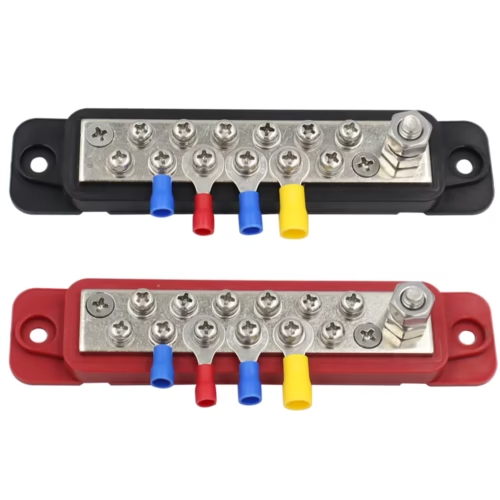
Bus Bar Power Distribution Block 180A 12VDC
Original price was: ر.ع.13.500.ر.ع.12.800Current price is: ر.ع.12.800.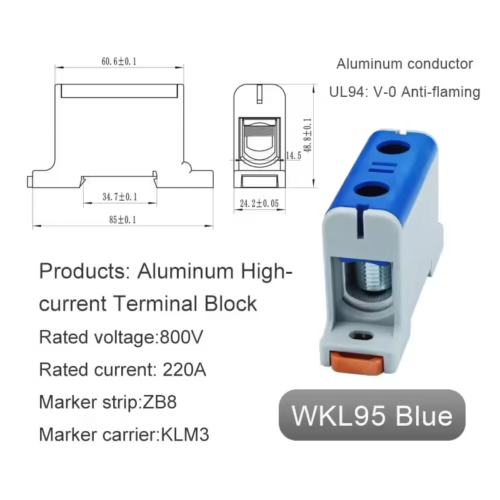
Distribution Block WKL95 | Transparent
Original price was: ر.ع.28.700.ر.ع.27.900Current price is: ر.ع.27.900.