
-
Informations +968 793 793 79
-
Sales Department +968 99 26 36 46
-
United Arab Emirates +971 526 324 552
PLC Modules
PLC Modules for Industrial Automation & Control
PLC modules are essential components in industrial automation systems, enabling precise control of machinery and processes. These modules form part of programmable logic controllers and handle inputs, outputs, and communication functions.
At UniGulfSupply, we supply reliable control modules designed for flexibility and performance. In most systems, they work alongside Automation Components and Industrial Sensors, which together create efficient and scalable control solutions.
Types of PLC Modules
Different module types support various automation requirements. For example:
- CPU Modules – Execute logic and manage system operations
- Input Modules – Receive signals from field devices
- Output Modules – Control actuators and machines
- Communication Modules – Enable data exchange between systems
- Analog Modules – Process variable signals such as temperature or pressure
- Expansion Modules – Extend system capacity when needed
As a result, users can configure systems based on specific application needs.
Why PLC Modules Are Important
These control modules improve efficiency and reliability in industrial systems. First, they reduce manual intervention by automating processes. In addition, they ensure consistent and accurate operations. Moreover, they help minimize downtime by enabling quick diagnostics and response.
When integrated with Process Control Instruments and Control Panels, they create responsive and well-coordinated automation systems.
Applications
These modules support a wide range of industrial applications. For instance:
- Manufacturing and assembly lines
- Packaging and material handling systems
- Oil & gas and energy operations
- Water treatment and utilities
- Building automation systems
- Robotics and machine control
Therefore, they remain a core element in modern automation setups.
Selection Guide
To choose the right modules, consider the following factors:
- I/O Requirements – Number and type of inputs and outputs
- Processing Needs – Complexity and speed of operations
- Communication Protocols – Compatibility with industrial networks
- Scalability – Ability to expand the system
- Environmental Conditions – Suitability for industrial environments
- Integration – Compatibility with Automation Components
By evaluating these aspects, users can ensure optimal performance and long-term reliability.
Industry Use
In industrial automation, these modules act as the control core of systems. For example, in manufacturing, they ensure repeatable and precise operations. Meanwhile, in utilities, they help monitor and control infrastructure efficiently. As industries evolve, they continue to rely on these systems for improved productivity.
Product Bridge
Our range includes:
- CPU and control units
- Digital and analog I/O modules
- Communication and expansion modules
- Modular automation components
These products integrate easily with HMI Systems and Industrial Sensors, allowing complete and flexible automation solutions.
FAQ
Q1: What is a PLC module?
It is a component used within a programmable controller to manage automation tasks.
Q2: What types are commonly used?
CPU, input, output, and communication modules are the most common.
Q3: Can these systems be expanded?
Yes, users can add modules to increase functionality as needed.
Q4: Are these modules reliable?
Yes, manufacturers design them for continuous industrial operation.
Q5: Where are they typically used?
They are widely used in manufacturing, utilities, and automation systems.
Industrial Supply Section
UniGulfSupply supplies high-quality automation modules across Oman and the UAE. In addition, we provide Automation Components, HMI Systems, and Industrial Control Equipment, ensuring complete solutions for industrial automation.
PLC modules remain central to modern automation systems. As industries move toward smarter operations, these modules continue to support efficiency, accuracy, and system reliability. Therefore, investing in the right components ensures long-term performance and scalability.
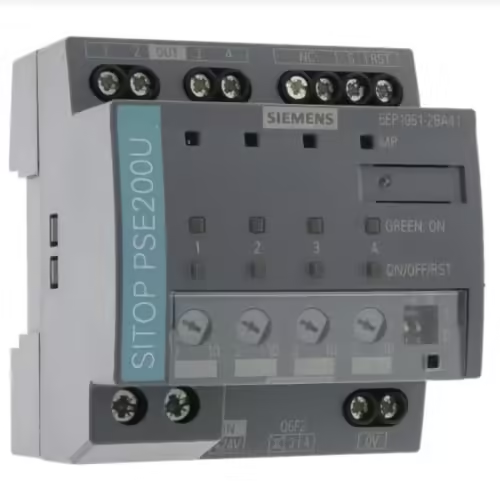
6EP1961-2BA41 | MODULE SIEMENS
Original price was: ر.ع.150.000.ر.ع.140.000Current price is: ر.ع.140.000.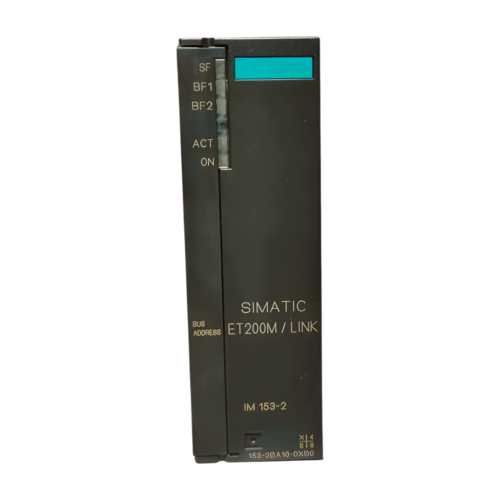
6ES7153-2BA10-0XB0 | SIEMENS
Original price was: ر.ع.565.000.ر.ع.540.000Current price is: ر.ع.540.000.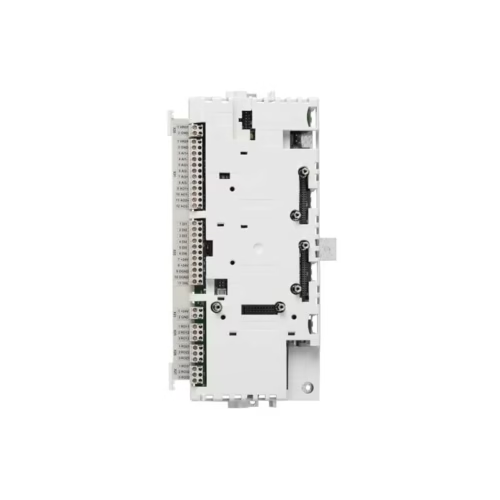
ABB RDCU Drive Control
Original price was: ر.ع.550.000.ر.ع.480.000Current price is: ر.ع.480.000.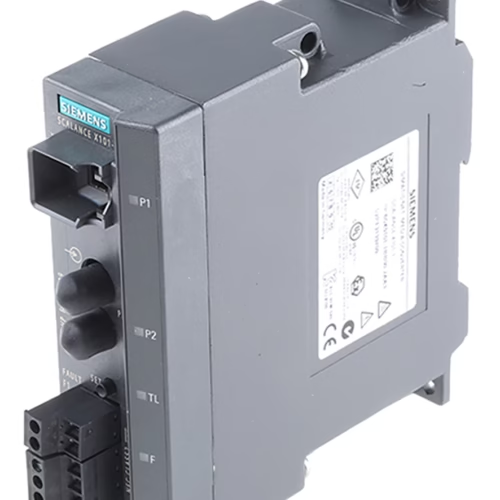
Siemens 6ES7 | LAN Connection Module