
-
Informations +968 793 793 79
-
Sales Department +968 99 26 36 46
-
United Arab Emirates +971 526 324 552
Pressure Transmitters
Pressure Transmitters for Industrial Process Measurement & Control
Pressure transmitters measure and convert pressure into electrical signals for monitoring and control systems. As a result, they play a key role in maintaining process accuracy, safety, and efficiency across industrial applications.
At UniGulfSupply, we supply reliable pressure measurement solutions designed for demanding environments across Oman & UAE. Therefore, users can achieve consistent system performance and precise control.
What Are Pressure Transmitters?
These devices detect pressure in liquids, gases, or steam and convert it into standardized output signals such as 4–20 mA. Consequently, control systems can monitor and regulate process conditions effectively.
In addition, they integrate easily with PLCs, SCADA systems, and automation setups. For complete monitoring solutions, they are often used alongside PT100 Sensors, Controllers, and Data Loggers.
Types of Pressure Transmitters
Different designs support a wide range of industrial applications. For example:
Gauge Type
Measures pressure relative to atmospheric pressure. Therefore, it suits general industrial use.
Absolute Type
Measures pressure against a vacuum reference. As a result, it supports high-precision applications.
Differential Type
Measures the difference between two pressure points. Consequently, it is ideal for flow monitoring and filter condition analysis.
Smart Transmitters
Provide digital communication and advanced diagnostics. Moreover, they enable remote monitoring and improved system efficiency.
Why Pressure Transmitters Are Important
Accurate pressure measurement directly impacts system performance. First, these devices help maintain stable operating conditions. In addition, they improve safety by detecting abnormal pressure levels early.
Moreover, they enhance efficiency by supplying real-time data to control systems. Without proper monitoring, pressure variations may lead to equipment damage or process instability.
Using high-quality transmitters helps you:
- maintain process accuracy
- improve system safety
- detect faults early
- support automation control
- enhance operational efficiency
Typical Applications
These devices are widely used across industries. For instance:
- oil and gas systems
- water and wastewater treatment
- HVAC installations
- manufacturing processes
- chemical processing plants
Because many processes depend on stable pressure conditions, these transmitters ensure reliable and continuous operation.
How to Select the Right Pressure Transmitter
Choosing the correct device depends on several key factors. First, determine the required pressure range for your application. Then, select the appropriate output signal and accuracy level.
Next, evaluate the operating environment, including temperature and media type. For example, corrosive conditions require specialized materials.
Finally, ensure compatibility with related systems such as Controllers and Data Loggers. This ensures seamless integration and accurate monitoring.
FAQs
What is the output of a pressure transmitter?
Most models provide a 4–20 mA signal, while advanced versions may include digital communication options.
Can pressure transmitters operate in harsh environments?
Yes. Many industrial models are designed for high temperature, pressure, and corrosive conditions.
What is the difference between a sensor and a transmitter?
A sensor detects pressure, while a transmitter converts it into a standardized electrical signal.
Industrial Supply
UniGulfSupply provides high-quality pressure transmitters and industrial measurement solutions across Oman & UAE. In addition, we supply PT100 Sensors, Controllers, and Data Loggers for complete monitoring and automation systems.
Pressure transmitters remain essential for accurate process control. As industrial systems continue to evolve, these devices play a critical role in ensuring safety, efficiency, and long-term reliability.
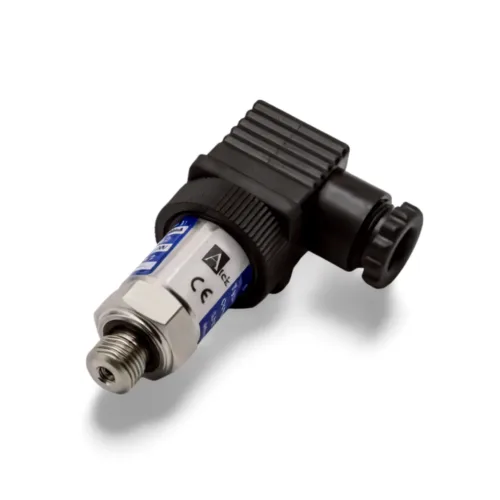
Pressure Transmitter | BCT 22
Original price was: ر.ع.30.000.ر.ع.28.000Current price is: ر.ع.28.000.