
-
Informations +968 793 793 79
-
Sales Department +968 99 26 36 46
-
United Arab Emirates +971 526 324 552
Signal Isolators & Converters
Signal Isolators & Converters for Reliable Industrial Signal Control
Signal isolators and converters are essential devices used to isolate, convert, and transmit electrical signals safely within industrial control systems. They help prevent interference, protect equipment, and ensure accurate signal transmission between field devices and control systems.
At UniGulfSupply, we supply high-quality signal interface devices designed for precision and reliability. In many applications, these components work alongside Control Relays and Automation Components, helping users maintain stable and interference-free control systems.
Types of Signal Isolators & Converters
Different device types support a wide range of signal processing needs. For example:
- Analog Signal Isolators – Isolate signals such as 4–20mA or 0–10V
- Signal Converters – Convert signals between different formats
- Temperature Signal Converters – Convert RTD or thermocouple signals
- Loop-Powered Isolators – Operate without external power supply
- Multi-Channel Isolators – Handle multiple signal inputs and outputs
As a result, users can select the right device based on system requirements and signal type.
Why Signal Isolators & Converters Are Important
These devices play a critical role in system accuracy and protection. First, they isolate electrical signals to prevent noise and interference. In addition, they protect sensitive equipment from voltage spikes and faults. Moreover, they ensure reliable data transmission between field instruments and control systems.
When integrated with Control Panels & Monitoring Systems and automation devices, they improve overall system stability and performance.
Applications
These devices are widely used in:
- Industrial automation systems
- Process control and instrumentation
- PLC and SCADA systems
- Power plants and utilities
- Oil & gas and chemical industries
- HVAC and building automation
Therefore, they are essential for accurate signal management and system protection.
Selection Guide
To choose the right device, consider the following:
- Signal Type – Current (4–20mA), voltage, RTD, or thermocouple
- Input/Output Configuration – Required signal conversion
- Isolation Level – Protection requirements
- Power Supply – Loop-powered or externally powered
- Mounting Type – DIN rail compatibility
- Integration – Compatibility with Control Relays and automation systems
By evaluating these factors, users can ensure reliable and accurate signal processing.
Industry Use
In industrial environments, these devices ensure stable signal transmission and protect control systems. Meanwhile, in process industries, they maintain measurement accuracy and reduce interference. As systems become more complex, reliable signal conditioning becomes increasingly important.
Product Bridge
Our range includes:
- Analog signal isolators
- Signal converters for voltage and current
- Temperature signal interface devices
- DIN rail mounted signal conditioning units
These products integrate seamlessly with Control Relays and Automation Components, supporting complete control system solutions.
FAQ
Q1: What is a signal isolator used for?
It isolates electrical signals to prevent interference and protect equipment.
Q2: What does a signal converter do?
It converts signals from one format to another.
Q3: Why is signal isolation important?
It improves accuracy and protects sensitive systems.
Q4: Are these devices used with PLC systems?
Yes, they are commonly used in PLC and automation systems.
Q5: Can they handle temperature signals?
Yes, specific models support RTD and thermocouple inputs.
Industrial Supply Section
UniGulfSupply supplies high-quality automation and control components across Oman and the UAE. In addition to signal isolators and converters, we offer Control Relays, Automation Components, and other solutions for complete control systems.
Signal isolators and converters are essential for maintaining accurate and reliable industrial control systems. As automation systems grow more advanced, these devices continue to play a key role in ensuring stable signal transmission and system protection.
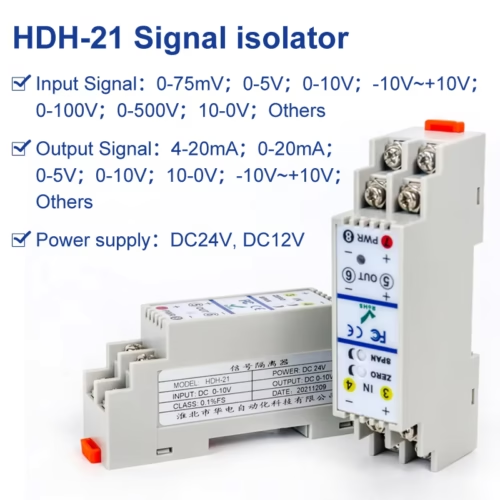
HDH-21 Universal Signal Conditioner Isolator | Input & Output 4-20mA 0-5V 0-10V
Original price was: ر.ع.88.000.ر.ع.79.800Current price is: ر.ع.79.800.