-
Informations +968 793 793 79
-
Sales Department +968 99 26 36 46
-
United Arab Emirates +971 526 324 552
Installation Testers
Installation Testers for Electrical Safety & Compliance Testing
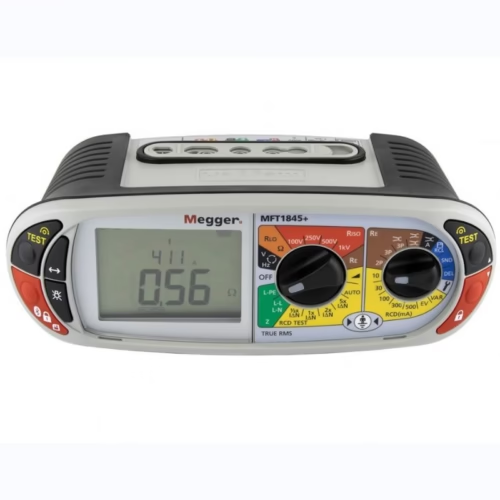
Installation testers are essential instruments used to verify the safety and compliance of electrical installations. They perform multiple tests to ensure circuits, wiring, and protective systems meet required standards before commissioning.
At UniGulfSupply, we supply reliable multi-function testing devices designed for professional use. In many applications, these instruments work alongside Test & Measurement Instruments and Electrical Safety Equipment, helping users ensure safe and compliant installations.
Types of Installation Testers
Different tester types support a range of electrical testing requirements. For example:
- Multi-Function Installation Testers – Combine multiple tests in one device
- Portable Installation Testers – Designed for field use and mobility
- Advanced Digital Testers – Provide accurate readings with digital interfaces
- Loop & Line Testers – Measure loop impedance and line conditions
- RCD Testers – Verify residual current device performance
As a result, users can select the right solution based on testing scope and application needs.
Why Installation Testers Are Important
These instruments play a critical role in electrical safety. First, they ensure installations meet regulatory standards. In addition, they help detect faults before systems go live. Moreover, they reduce the risk of electrical hazards and system failures.
When used with Earth & Ground Resistance Testers and Insulation Testers, they provide a complete electrical testing solution.
Applications
These testing devices are widely used in:
- Electrical installation and commissioning
- Industrial and commercial inspections
- Maintenance and troubleshooting
- Power distribution systems
- Building and infrastructure projects
- Renewable energy installations
Therefore, they are essential for verifying safe and reliable electrical systems.
Selection Guide
To choose the right tester, consider the following:
- Test Functions – Required tests (RCD, insulation, loop impedance)
- Accuracy – Precision of measurements
- Ease of Use – Interface and portability
- Compliance Standards – Required certifications
- Data Features – Logging and reporting capabilities
- Integration – Compatibility with Test & Measurement Instruments
By evaluating these factors, users can ensure accurate testing and efficient operation.
Industry Use
In industrial environments, these testers ensure systems operate safely before startup. Meanwhile, in construction and maintenance, they help verify compliance with electrical standards. As safety requirements increase, reliable testing equipment becomes more important.
Product Bridge
Our range includes:
- Multi-function installation testers
- Loop impedance and RCD testers
- Portable electrical testing devices
- Advanced digital testing instruments
These products integrate seamlessly with Insulation Testers and other diagnostic tools, supporting complete testing solutions.
FAQ
Q1: What is an installation tester used for?
It verifies electrical installations for safety and compliance.
Q2: What tests can it perform?
It can perform insulation, loop impedance, RCD, and continuity tests.
Q3: Is it required for electrical commissioning?
Yes, it is essential for verifying installations before use.
Q4: Can it replace multiple testers?
Yes, multi-function models combine several testing capabilities.
Q5: Is it suitable for industrial use?
Yes, it is widely used in industrial and commercial applications.
Industrial Supply Section
UniGulfSupply supplies high-quality testing instruments across Oman and the UAE. In addition to installation testers, we offer Test & Measurement Instruments, Earth & Ground Resistance Testers, and Insulation Testers for complete electrical testing solutions.
Installation testers are essential for ensuring electrical safety and compliance. As standards become stricter, these instruments continue to play a key role in verifying reliable and hazard-free installations.