
-
Informations +968 793 793 79
-
Sales Department +968 99 26 36 46
-
United Arab Emirates +971 526 324 552
Busbar Insulators
Busbar Insulators for Electrical Panels and Power Distribution Systems
Busbar insulators provide strong mechanical support and electrical isolation for busbars in control panels, switchgear, and power distribution systems. They hold conductors firmly in place while maintaining safe clearance from grounded surfaces. As a result, electrical systems operate reliably under high current conditions.
At UniGulfSupply, we supply durable insulators designed for industrial panels, distribution boards, and heavy-duty electrical installations across Oman & UAE. These components ensure stable conductor positioning and long-term operational safety.
Role of Busbar Insulators in Electrical Systems
Busbars carry significant electrical current and require secure mounting to prevent movement and electrical faults. Therefore, installers use busbar insulators to:
- support busbars under mechanical load
- maintain safe spacing between phases
- prevent contact with panel surfaces
- ensure system stability during operation
Because of these functions, busbar insulators are essential in high-current electrical systems.
Types:
Different applications require specific designs and materials. Common types include:
- Epoxy resin insulators
- Cylindrical (post-type) insulators
- Hexagonal support insulators
- High-strength composite insulators
Each type offers varying levels of mechanical strength, insulation capacity, and mounting flexibility.
Typical Applications
These insulators are widely used in:
- electrical control panels
- switchgear systems
- power distribution boards
- motor control centers
- generator panels
In these environments, they provide stable support for copper or aluminum busbars while maintaining electrical isolation.
Key Benefits
Using quality busbar insulators helps you:
- handle high current loads safely
- prevent electrical short circuits
- maintain phase separation
- improve panel durability
- reduce vibration-related issues
Additionally, proper support reduces stress on conductors and extends system lifespan.
Installation Overview
Technicians mount these insulators onto panel backplates or structural supports. They then fix busbars onto the insulators using bolts or clamps. This setup keeps conductors elevated and securely positioned.
Because of this arrangement, systems maintain consistent spacing and safe operation even under load fluctuations.
Selecting the Right Busbar Insulator
When choosing a busbar insulator, consider:
- voltage rating
- mechanical load capacity
- busbar size and weight
- mounting height and spacing
- environmental conditions
For high-load applications, always select insulators with adequate strength and insulation performance.
Related Products
Busbar insulators form part of a complete panel system and are commonly used with:
- Industrial Insulators for broader insulation support
- Mounting & DIN Rail Systems for structured panel layouts
- Waterproof Enclosures & Junction Boxes for environmental protection
Together, these components create safe and organized electrical installations.
FAQs
What is a busbar insulator used for?
It supports and isolates busbars in electrical panels, preventing contact with grounded surfaces and maintaining safe spacing.
Can busbar insulators handle high current?
Yes. They are specifically designed to support high-current conductors in power distribution systems.
Where are busbar insulators installed?
They are installed inside control panels, switchgear, and distribution boards to hold busbars securely.
Reliable Support for High-Current Systems
Busbar insulators play a vital role in maintaining safe and stable electrical distribution. Therefore, selecting the right insulator ensures long-term reliability in industrial and commercial installations.
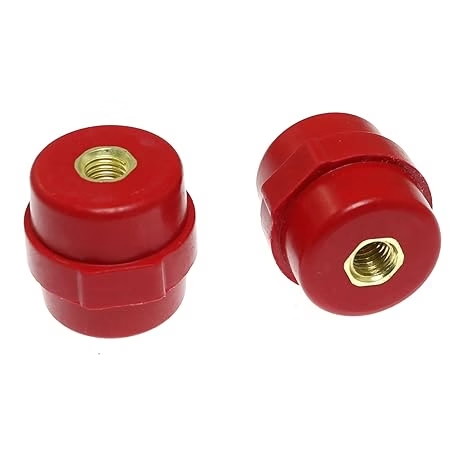
Hexagonal | Copper Busbar Insulator
Original price was: ر.ع.0.900.ر.ع.0.700Current price is: ر.ع.0.700.