
-
Informations +968 793 793 79
-
Sales Department +968 99 26 36 46
-
United Arab Emirates +971 526 324 552
Timer Switches
Industrial Timer Switches & Time Delay Relays
Industrial timer switches control equipment based on time delay. They automatically start, stop, or sequence electrical devices after a preset time. Therefore, machines can operate in the correct order without constant operator supervision.
At UniGulfSupply, we supply reliable timer switches and time-delay relays suitable for control panels, machinery, and building automation systems across Oman & UAE. These devices improve automation accuracy and protect equipment from sudden operation.
Timers receive a signal from push buttons, sensors, or controllers. After the selected delay period, they activate relays or contactors. As a result, motors and electrical loads operate in a controlled sequence.
Types Available
This category typically includes:
ON-delay timers
OFF-delay timers
Cyclic timers
Star-delta timers
Digital timers
Analog timers
Multi-function timers
DIN rail mounted timers
They operate together with Industrial Relays and Industrial Contactors
They also work with Industrial Sensors and Industrial Push Buttons
Why Timer Switches Are Important
Many machines must not start instantly. Instead, equipment needs a controlled delay.
Timers help to:
prevent high inrush current
allow sequential machine operation
automate processes
protect motors
reduce operator intervention
Additionally, controlled starting improves equipment life and system reliability.
Typical Applications
Timer switches are commonly used in:
motor starter panels
star-delta motor starters
pump control systems
lighting automation
conveyor systems
compressors
HVAC systems
generator panels
Because industrial processes depend on correct timing, delay control becomes essential.
How a Timer Works
A simple sequence:
Push button or sensor sends signal
Timer begins countdown
Preset delay expires
Relay or contactor activates
Equipment starts or stops
This allows automatic control without manual switching.
Choosing the Correct Timer
When selecting a timer, consider:
delay range (seconds, minutes, hours)
voltage supply
mounting type (DIN rail or panel)
number of contacts
function type (ON-delay or OFF-delay)
For example, star-delta motor starters require a specific star-delta timer.
FAQs
What is the difference between ON-delay and OFF-delay?
An ON-delay timer activates after a delay. An OFF-delay timer keeps equipment running for a period after the signal stops.
Can a timer start a motor directly?
No. It controls a relay or contactor, which then switches the motor.
Are timers used with PLCs?
Yes. However, timers are often used as standalone control devices when a PLC is not required.
Where are timer switches installed?
They are mounted inside electrical control panels on DIN rails.
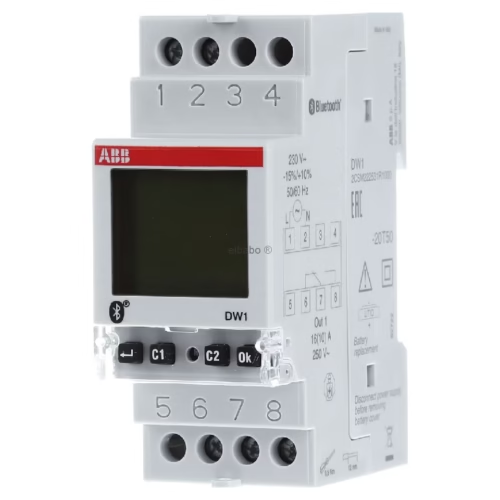
ABB Digital Time Switch DW Series (DW1)
Original price was: ر.ع.68.800.ر.ع.66.700Current price is: ر.ع.66.700.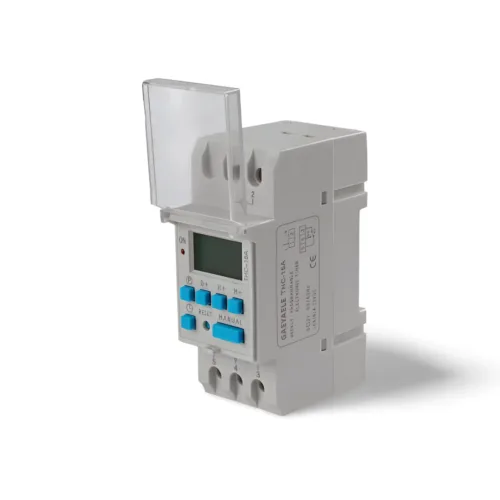
Digital Timer Switch | THC-15A 16amp 220vAC
Original price was: ر.ع.7.500.ر.ع.6.300Current price is: ر.ع.6.300.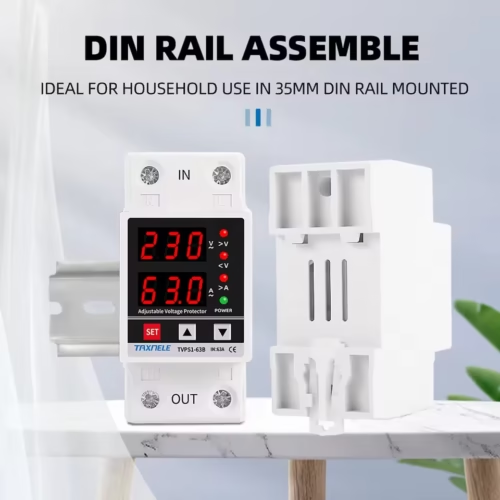
Digital Timer Switch Relay | 24H Programmable
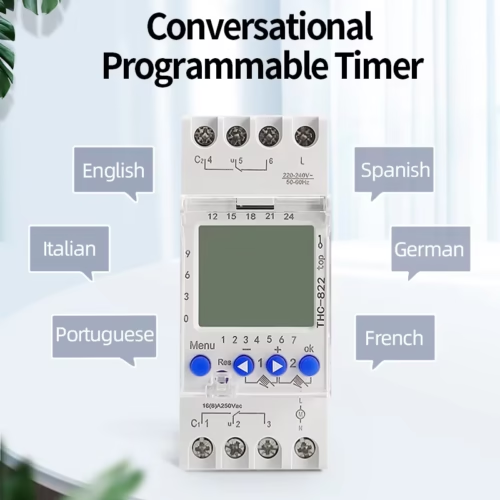
Digital Timer THC-822 | Week Programmable Timer
Original price was: ر.ع.16.500.ر.ع.15.800Current price is: ر.ع.15.800.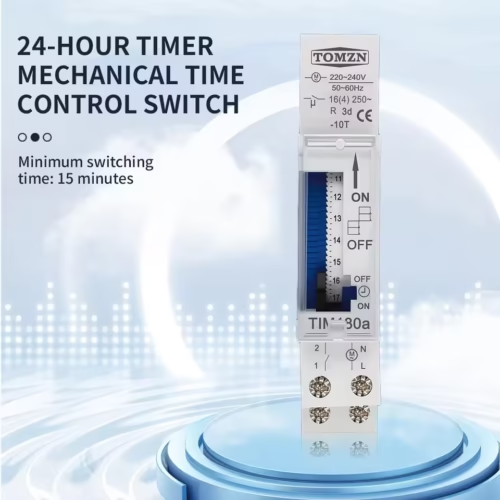
DIN Rail Mounted | Mechanical Timer Switch
Original price was: ر.ع.18.500.ر.ع.16.700Current price is: ر.ع.16.700.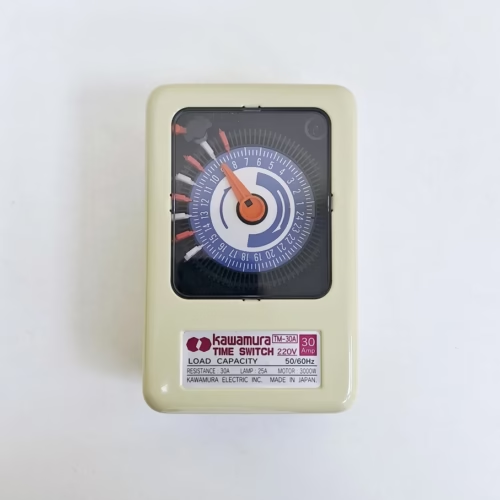
Electric Analogue Timer | TM-30A, 30A, 110-250VAC (Kawamura)
Original price was: ر.ع.18.500.ر.ع.18.000Current price is: ر.ع.18.000.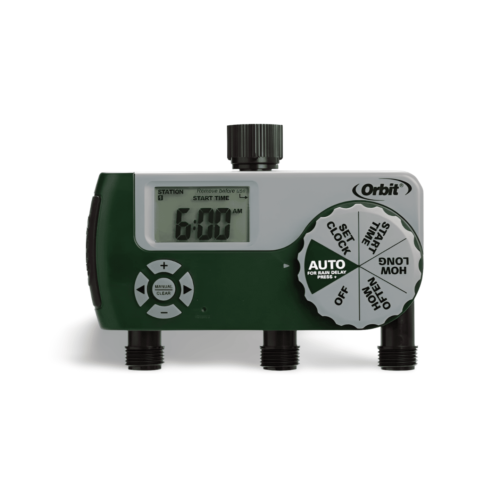
Garden Timer | 56082 Two Way (Orbit)
ر.ع.45.000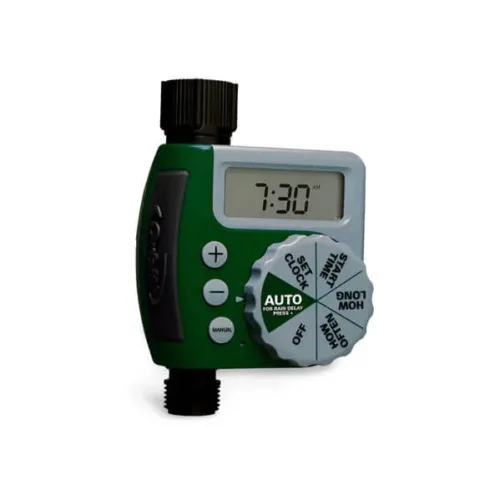
Garden Timer | 62061Z One Way (Orbit)
Original price was: ر.ع.19.500.ر.ع.18.600Current price is: ر.ع.18.600.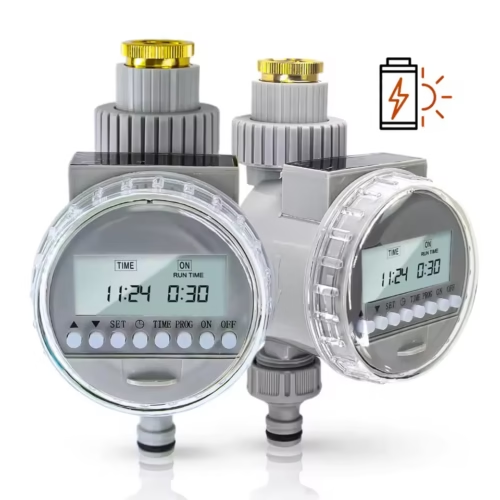
Solar Powered Water Timer Irrigation Waterproof for Garden
Original price was: ر.ع.38.500.ر.ع.33.800Current price is: ر.ع.33.800.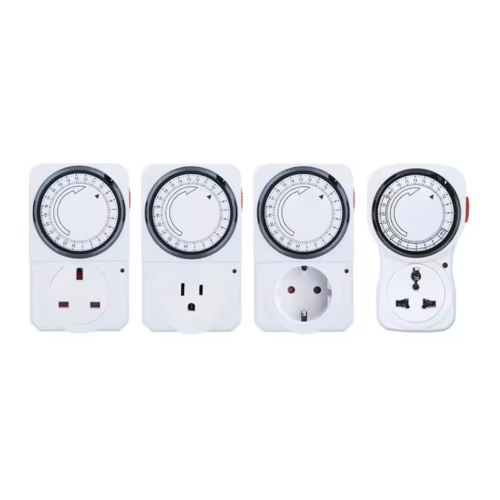
Timer Switch Mechanical | 230VAC 3500W 16A
Original price was: ر.ع.12.500.ر.ع.11.800Current price is: ر.ع.11.800.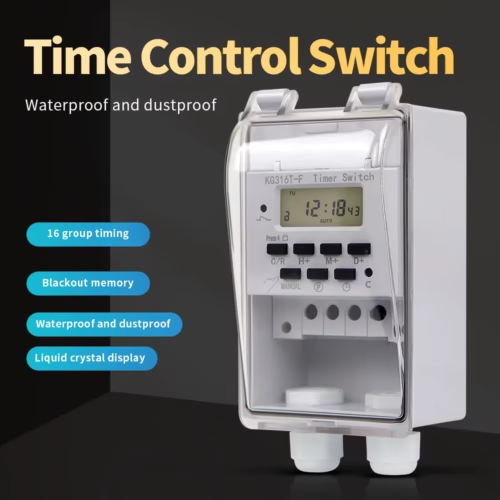
Waterproof Digital Timer | KG316T
Original price was: ر.ع.28.500.ر.ع.26.800Current price is: ر.ع.26.800.