
-
Informations +968 793 793 79
-
Sales Department +968 99 26 36 46
-
United Arab Emirates +971 526 324 552
Pressure Transmitters
Introduction
Pressure transmitters measure and convert pressure into electrical signals for monitoring and control systems. They play a key role in maintaining process accuracy, safety, and efficiency in industrial applications.
At UniGulfSupply, we supply reliable measurement solutions designed for demanding environments across Oman and the UAE. As a result, users can achieve precise control and consistent system performance.
What Are Pressure Transmitters?
These devices detect pressure in liquids, gases, or steam and convert it into a standardized output signal such as 4–20 mA. Therefore, they allow control systems to monitor and regulate process conditions effectively.
In addition, they support integration with PLCs, SCADA systems, and industrial automation setups.
Types Available
Different designs support a wide range of applications and industries.
Gauge Type
Gauge versions measure pressure relative to atmospheric pressure. As a result, they are commonly used in general industrial applications.
Absolute Type
Absolute versions measure pressure relative to a vacuum reference. Therefore, they are suitable for precise and scientific applications.
Differential Type
Differential models measure the difference between two pressure points. Consequently, they are ideal for flow measurement and filter monitoring.
Smart Transmitters
Smart designs offer digital communication and advanced diagnostics. In addition, they improve system efficiency and enable remote monitoring.
Why They Matter
Accurate pressure measurement is essential for process control. First, these devices help maintain system stability. Next, they improve safety by detecting abnormal pressure conditions.
Furthermore, they enhance efficiency by providing real-time data for control systems. For complete setups, you can integrate them with controllers and dataloggers.
Applications
These devices are widely used across industries. For example:
Oil and gas systems
Water and wastewater treatment
HVAC systems
Manufacturing processes
Chemical and process industries
How to Choose the Right One
Start by selecting the required pressure range for your application. Then, choose the appropriate output signal and accuracy level.
Next, consider the operating environment, including temperature and media type. For instance, corrosive environments require suitable materials.
Finally, ensure compatibility with related components such as PT100 sensors and automation systems.
FAQ
What is the output of a pressure transmitter?
Most models provide a 4–20 mA signal, while some offer digital communication options.
Can these devices be used in harsh environments?
Yes, many models are designed for high temperature, pressure, and corrosive conditions.
What is the difference between a sensor and a transmitter?
A sensor detects pressure, while a transmitter converts it into a usable electrical signal.
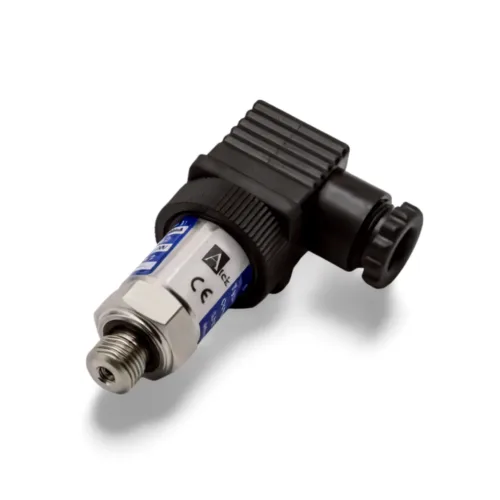
Pressure Transmitter | BCT 22
Original price was: ر.ع.30.000.ر.ع.28.000Current price is: ر.ع.28.000.