
-
Informations +968 793 793 79
-
Sales Department +968 99 26 36 46
-
United Arab Emirates +971 526 324 552
Limit Switches
Limit Switches for Industrial Automation & Control
Limit switches are essential electromechanical devices used to detect the presence, position, or movement of objects in industrial systems. They help control machinery by triggering actions when a defined limit is reached.
At UniGulfSupply, we supply durable and high-precision limit switches designed for demanding environments. These devices often work alongside Proximity Sensors and Industrial Safety Sensors to ensure accurate position detection and safe machine operation.
Types:
Different designs are available to suit various industrial applications:
Plunger Type – Compact and widely used for linear motion detection
Roller Lever Type – Ideal for applications with moving parts and conveyors
Rotary Limit Switches – Used for rotational position monitoring
Heavy-Duty Limit Switches – Built for harsh industrial environments
Miniature Limit Switches – Suitable for space-constrained applications
Why these are Switches Are Important!
Limit switches play a key role in automation and safety. First, they provide precise control over machine movement. Additionally, they help prevent over-travel and mechanical damage. Moreover, they enhance operational safety by acting as reliable position indicators.
When integrated with Control Panels & Monitoring Systems and Industrial Alarm Systems, they enable quick response and improved system reliability.
Applications
These devices are widely used across industries:
Conveyor systems and material handling
Packaging and production lines
Machine tools and automation equipment
Elevators and lifting systems
Oil & gas and heavy industries
Robotics and automated machinery
Selection Guide
Choosing the right switch depends on several factors:
Actuator Type – Plunger, roller, lever, or rotary
Operating Environment – Dust, moisture, vibration, or hazardous areas
Electrical Rating – Voltage and current requirements
Mechanical Life – Durability and switching cycles
Mounting Style – Panel, surface, or machine-mounted
Integration Needs – Compatibility with Process Control Instruments
Selecting the right configuration ensures reliable and long-lasting performance.
Industry Use
In industrial automation, these switches provide accurate position feedback for machinery. In manufacturing, they help control movement and ensure repeatable processes. Meanwhile, in safety systems, they act as critical components within broader Detection & Safety Systems.
Product Bridge
Our range includes:
Standard industrial limit switches
Heavy-duty and IP-rated models
Compact and precision switches
Rotary and position control switches
These products integrate seamlessly with Industrial Control Components and are often paired with Proximity Sensors for enhanced detection accuracy.
FAQ
Q1: What is a limit switch used for?
It detects object position and triggers control actions in machinery.
Q2: Are these switches suitable for harsh environments?
Yes, many models are designed with high IP ratings for industrial use.
Q3: Can limit switches replace proximity sensors?
They serve similar purposes, but mechanical switches are preferred for physical contact detection.
Q4: Do they require maintenance?
They are highly durable, but periodic inspection ensures optimal performance.
Q5: Where are they commonly installed?
They are used in conveyors, machines, elevators, and automation systems.
Industrial Supply Section
UniGulfSupply provides high-quality switching solutions across Oman and the UAE. In addition to limit switches, we offer related categories such as Proximity Sensors, Industrial Switches, and Automation Control Devices to support complete system integration.
Limit switches remain a fundamental component in industrial automation systems. As industries move toward higher precision and safety standards, these devices continue to play a vital role in ensuring accurate control and reliable operation.
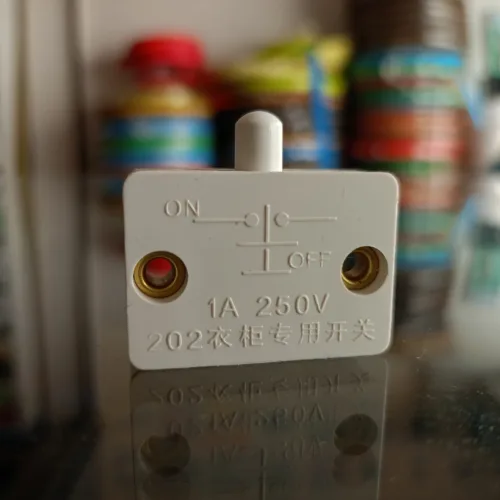
Door limit Switch 1A
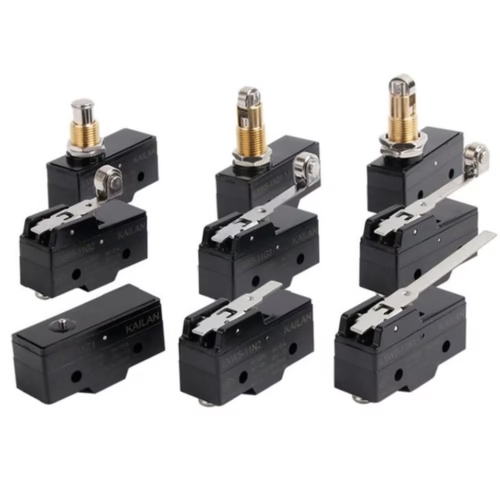
Limit Switch | AZ TZ-7310 7311 7312 7141
Original price was: ر.ع.14.500.ر.ع.12.600Current price is: ر.ع.12.600.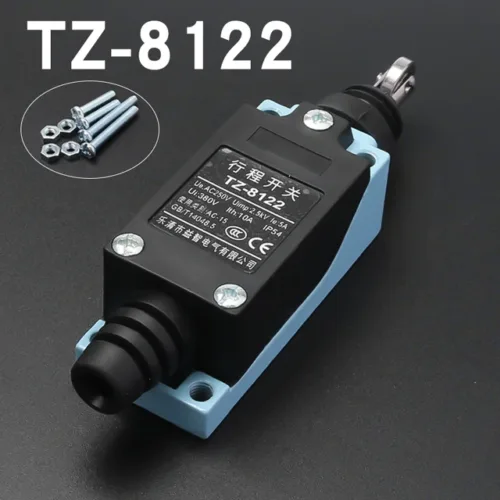
Limit Switch | TZ 8122
Original price was: ر.ع.5.500.ر.ع.5.200Current price is: ر.ع.5.200.
Silver Contact Limit Switch
Original price was: ر.ع.10.500.ر.ع.9.200Current price is: ر.ع.9.200.