-
Informations +968 793 793 79
-
Sales Department +968 99 26 36 46
-
United Arab Emirates +971 526 324 552
Terminal Blocks
DIN Rail Terminal Blocks for Safe and Organized Electrical Connections
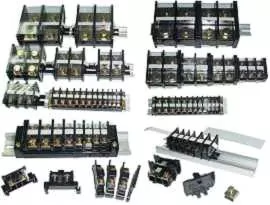
Din Rail Terminal blocks provide secure and structured wire termination inside electrical panels and enclosures. They connect conductors safely while maintaining clear circuit separation. As a result, installers can organize wiring efficiently and reduce troubleshooting time.
At UniGulfSupply, we supply high-quality DIN rail terminal blocks suitable for control panels, machinery wiring, and industrial installations across Oman & UAE. These components simplify panel building and improve long-term reliability.
Installers mount terminal blocks onto Mounting & DIN Rail Systems, where they form organized connection rows. In addition, they are commonly installed inside Waterproof Enclosures & Junction Boxes to protect wiring from dust and moisture.
Products Included in This Category
This category includes:
screw-type terminal blocks
spring clamp terminal blocks
feed-through terminal blocks
earth (ground) terminal blocks
end plates and partition plates
marking tags and accessories
Each type supports safe conductor termination while maintaining electrical separation.
Why Terminal Blocks Are Important
Modern electrical systems require clear and safe wiring structures. Without proper termination, loose connections can cause overheating, signal loss, or system failure.
Terminal blocks therefore help you:
create organized wiring layouts
ensure secure conductor connections
simplify circuit identification
improve maintenance efficiency
reduce electrical faults
Because each wire terminates individually, technicians can isolate and test circuits without disturbing adjacent connections.
How Terminal Blocks Work
Terminal blocks clamp conductors using screws or spring mechanisms. Installers strip the wire, insert it into the terminal, and tighten or secure the clamp. The block then maintains strong electrical contact while preventing wire pull-out.
Moreover, modular designs allow users to expand or modify terminal assemblies easily. This flexibility makes them ideal for growing control systems.
Typical Applications
DIN rail terminal blocks are widely used in:
industrial control panels
motor control systems
building automation systems
HVAC control panels
pump and irrigation systems
machine control wiring
Because they improve wiring clarity, they are standard in professional electrical installations.
Selecting the Right Terminal Block
When choosing terminal blocks, consider:
conductor size
rated voltage and current
mounting type (DIN rail)
environment (indoor or outdoor)
vibration exposure
For outdoor installations, always place terminal blocks inside sealed enclosures to maintain protection.
In addition, proper identification of each connected conductor improves safety and simplifies maintenance work. Installers often combine terminal blocks with Ferrule Printers so that every wire entering the panel is clearly marked and easy to trace.
FAQs
What is a DIN rail terminal block used for?
It connects and organizes electrical conductors inside panels and enclosures.
What is the difference between screw and spring terminal blocks?
Screw terminals use mechanical tightening, whereas spring terminals use clamp pressure for faster installation.
Can terminal blocks handle high current?
Yes, however you must select a block rated for the required current and conductor size.
Do terminal blocks improve maintenance?
Yes. They allow technicians to isolate and test circuits quickly.