-
Informations +968 793 793 79
-
Sales Department +968 99 26 36 46
-
United Arab Emirates +971 526 324 552
Building Automation Gateways
Building Automation Gateways for Smart System Integration & Control
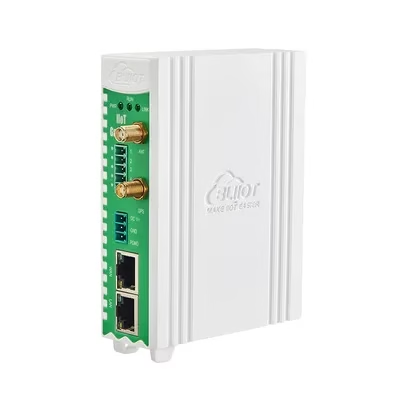
Building automation gateways enable communication between different devices and protocols within smart building systems. They connect controllers, sensors, and equipment, allowing seamless data exchange and centralized control.
At UniGulfSupply, we supply reliable gateway solutions designed for integration and performance. In many applications, these devices work alongside Controllers and Automation Components, helping users build efficient and connected building management systems.
Types of Building Automation Gateways
Different gateway types support various communication and integration needs. For example:
- Protocol Gateways – Convert between protocols such as Modbus, BACnet, and KNX
- IoT Gateways – Enable cloud connectivity and remote monitoring
- Fieldbus Gateways – Connect industrial field devices to control systems
- Edge Gateways – Process and manage data locally
- Multi-Protocol Gateways – Support multiple communication standards
As a result, users can select the right gateway based on system compatibility and integration requirements.
Why Building Automation Gateways Are Important
These devices play a key role in modern building systems. First, they enable communication between different devices and platforms. In addition, they simplify system integration and reduce compatibility issues. Moreover, they improve monitoring and control efficiency.
When integrated with Control Panels & Monitoring Systems and automation devices, they create intelligent and scalable building systems.
Applications
These gateways are widely used in:
- Building management systems (BMS)
- Smart buildings and infrastructure
- HVAC control systems
- Energy management systems
- Industrial automation networks
- Commercial facilities and data centers
Therefore, they are essential for connected and efficient building operations.
Selection Guide
To choose the right gateway, consider the following:
- Supported Protocols – Modbus, BACnet, KNX, etc.
- Connectivity Options – Ethernet, Wi-Fi, or cellular
- Data Processing – Edge or cloud-based capabilities
- Scalability – Ability to expand system integration
- Security Features – Data protection and secure communication
- Integration – Compatibility with Controllers and automation systems
By evaluating these factors, users can ensure seamless integration and reliable performance.
Industry Use
In commercial and industrial environments, these gateways enable centralized system control. Meanwhile, in smart buildings, they improve energy efficiency and automation. As systems become more interconnected, reliable gateways become increasingly important.
Product Bridge
Our range includes:
- Protocol conversion gateways
- IoT and cloud-connected gateways
- Multi-protocol integration devices
- Industrial communication gateways
These products integrate seamlessly with Controllers and Automation Components, supporting complete building automation systems.
FAQ
Q1: What is a building automation gateway?
It connects devices and systems using different communication protocols.
Q2: Why are gateways needed in automation systems?
They enable communication and integration between different devices.
Q3: What protocols do they support?
Common protocols include Modbus, BACnet, and KNX.
Q4: Can they be used in smart buildings?
Yes, they are widely used in building management systems.
Q5: Do they support remote monitoring?
Yes, many gateways support cloud connectivity and remote access.
Industrial Supply Section
UniGulfSupply supplies advanced automation and integration solutions across Oman and the UAE. In addition to building automation gateways, we offer Controllers, Automation Components, and other products for complete system solutions.
Building automation gateways are essential for modern connected systems. As smart buildings and automation technologies evolve, these devices continue to play a key role in enabling seamless integration and efficient control.