-
Informations +968 793 793 79
-
Sales Department +968 99 26 36 46
-
United Arab Emirates +971 526 324 552
Load Break Switches
Load Break Switches for Safe Power Isolation & Control
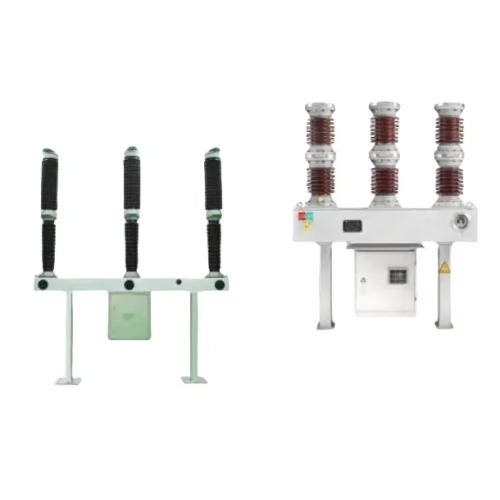
Load break switches provide a safe and reliable way to isolate electrical circuits under load conditions. They allow operators to disconnect power without shutting down the entire system, which improves both safety and operational flexibility.
At UniGulfSupply, we supply high-performance switching solutions designed for durability and consistent operation. In most installations, these devices work alongside Power Distribution Components and Electrical Protection Devices, ensuring controlled and secure power management.
Types of Load Break Switches
Different designs support various system requirements. For example:
- Manual Load Break Switches – Operated by hand for direct control
- Motorized Switches – Enable remote or automated operation
- Indoor Switches – Suitable for panel and enclosure installations
- Outdoor Switches – Built for harsh environmental conditions
- Fused Load Break Switches – Combine switching and protection functions
As a result, users can select solutions based on application and system design.
Why Load Break Switches Are Important
These switches play a critical role in electrical safety. First, they allow safe disconnection of circuits under load. In addition, they help prevent equipment damage during maintenance. Moreover, they improve system reliability by enabling controlled isolation.
When integrated with Circuit Protection Devices and Control Panels & Monitoring Systems, they support a safer and more efficient electrical infrastructure.
Applications
These switching devices are widely used in:
- Power distribution systems
- Industrial plants and manufacturing facilities
- Renewable energy installations
- Commercial and infrastructure projects
- Oil & gas and utility sectors
- Electrical substations
Therefore, they are essential for maintaining safe and flexible power control.
Selection Guide
To choose the right switch, consider the following:
- Voltage Rating – Compatibility with system voltage
- Current Capacity – Load handling requirements
- Operation Type – Manual or motorized control
- Installation Environment – Indoor or outdoor use
- Protection Features – Integrated fuse or isolation capabilities
- Integration – Compatibility with Power Distribution & Protection systems
By evaluating these factors, users can ensure reliable performance and safe operation.
Industry Use
In industrial environments, these switches allow safe isolation during maintenance. Meanwhile, in power distribution systems, they support efficient load management. As electrical systems become more complex, reliable switching solutions become increasingly important.
Product Bridge
Our range includes:
- Manual and motorized switching units
- Indoor and outdoor models
- Fused and non-fused designs
- High-capacity industrial switches
These products integrate seamlessly with Switchgear Components and Electrical Protection Devices, supporting complete power control systems.
FAQ
Q1: What is a load break switch used for?
It safely disconnects electrical circuits under load conditions.
Q2: How is it different from a circuit breaker?
It isolates circuits but does not provide automatic fault protection like a breaker.
Q3: Can it be used in industrial systems?
Yes, it is widely used in industrial and power distribution applications.
Q4: Are motorized versions available?
Yes, motorized models allow remote operation.
Q5: Does it improve safety?
Yes, it enables controlled isolation and reduces risk during maintenance.
Industrial Supply Section
UniGulfSupply supplies reliable power distribution solutions across Oman and the UAE. In addition to load break switches, we offer Electrical Protection Devices, Switchgear Components, and other Power Distribution & Protection products for complete system solutions.
Load break switches are essential for safe and efficient power management. As industries demand greater control and reliability, these devices continue to play a key role in ensuring system safety and operational flexibility.