-
Informations +968 793 793 79
-
Sales Department +968 99 26 36 46
-
United Arab Emirates +971 526 324 552
Panel Indicators
Panel Indicators for Industrial Control Panels
Panel indicators provide visual and audible signals that help operators monitor system status inside control panels. They display operating conditions, highlight faults, and trigger alerts when issues occur. As a result, panels become safer, easier to manage, and more responsive during operation.
At UniGulfSupply, we supply reliable panel indicators for contractors, panel builders, and industrial operators across Oman & UAE. These devices support real-time monitoring and improve system visibility in industrial and commercial environments.
Role of Indicators in Control Panels
These indicators act as the visual and audible interface between the system and the operator. They communicate machine status clearly, allowing quick decision-making during normal operation and fault conditions.
Technicians commonly install these devices alongside Panel Wiring Components, where signal control is managed. In addition, they connect them to DIN Rail Terminal Blocks, ensuring clean and organized wiring inside the panel.
Products Included in This Category
This category typically includes:
- Panel pilot lamps
- Signal lights
- LED indicator modules
- Multi-color status indicators
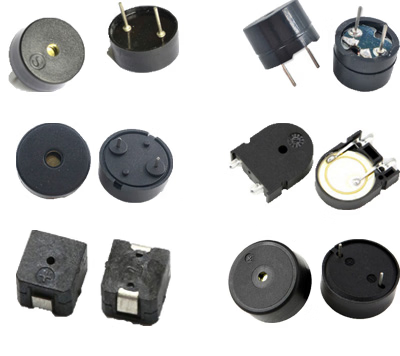
- Audible buzzers and alarms
- Panel-mounted warning lights
Most indicators connect directly to control circuits or relay outputs. Therefore, they provide immediate feedback on machine or system status.
Why these Indicators Are Important!
Industrial panels control multiple processes simultaneously. However, without clear indicators, operators cannot easily detect system conditions or faults.
Using panel indicators helps you:
- monitor system status in real time
- detect faults quickly
- improve operator response time
- simplify troubleshooting
- enhance operational safety
- reduce downtime
Because fast response is critical in industrial environments, clear signaling devices play a vital role.
How Panel Indicators Work
Panel indicators receive signals from control circuits, relays, or PLC outputs. They then display the system condition through light or sound.
A typical setup includes:
- signal input from control system
- indicator device (lamp or buzzer)
- visual or audible output
Because of this direct connection, operators receive instant feedback on system status.
Typical Applications
Panel indicators are widely used in:
- PLC control panels
- motor control centers (MCC)
- automation cabinets
- industrial machinery panels
- electrical switchboards
- process control systems
They are especially important in systems where operators must react quickly to changes or alarms. In many installations, they also work alongside Industrial Alarms & Audible Signaling to provide layered warning systems.
Selecting the Right Panel Indicator
Choose the appropriate indicator based on:
- signal type (visual or audible)
- voltage and current rating
- color coding requirements
- mounting size and panel cutout
- compatibility with PLC or relay outputs
For example, LED indicators provide long life and low energy consumption, while buzzers ensure immediate attention during fault conditions.
Industry Applications in Oman & UAE
Across Oman & UAE, panel indicators are widely used in:
- industrial automation systems
- manufacturing facilities
- infrastructure projects
- building management systems
- utility installations
Operators rely on these devices to maintain visibility, improve safety, and ensure smooth system operation.
FAQs
What is the difference between pilot lamps and buzzers?
Pilot lamps provide visual signals, while buzzers deliver audible alerts.
Can panel indicators be used outdoors?
Yes, but only if they are rated for outdoor use or installed inside protected enclosures.
How do panel indicators connect to control systems?
They connect to relay outputs, PLC outputs, or monitoring circuits to display real-time system status.
Clear Status Indication for Safer Operations
Panel indicators provide essential visibility into system performance. Therefore, selecting the right devices improves safety, reduces downtime, and ensures efficient control panel operation.