
-
Informations +968 793 793 79
-
Sales Department +968 99 26 36 46
-
United Arab Emirates +971 526 324 552
MCCB (Moulded Case Circuit Breakers)
MCCB (Moulded Case Circuit Breakers) for Industrial Power Protection
MCCB (Moulded Case Circuit Breakers) protect electrical systems from overload and short circuit conditions in medium- to high-current applications. In simple terms, they interrupt electrical flow when faults occur. As a result, they prevent equipment damage and ensure safe system operation.
Engineers install these breakers in industrial and commercial distribution systems where higher current capacity is required. Unlike Miniature Circuit Breakers (MCBs), which protect smaller circuits, MCCBs handle larger loads and offer adjustable protection settings. Therefore, they provide flexible and reliable protection in demanding environments.
At UniGulfSupply, we supply durable MCCB (Moulded Case Circuit Breakers) for installations across Oman & UAE. In addition, our range includes adjustable trip units for precise control. Moreover, robust construction ensures long service life under heavy-duty conditions. For this reason, engineers rely on them in structured power distribution systems.
These breakers commonly operate alongside
→ Miniature Circuit Breakers (MCB)
→ ACB (Air Circuit Breakers)
Consequently, they form a critical link between main and final circuit protection.
Types of MCCB (Moulded Case Circuit Breakers)
Different configurations support various protection requirements. For example:
- Thermal-Magnetic MCCBs – Provide overload and short circuit protection
- Electronic MCCBs – Offer adjustable and precise protection settings
- Fixed MCCBs – Designed for standard applications
- Adjustable MCCBs – Allow customized protection levels
As a result, users can select the appropriate type based on system demands and load conditions.
Why These Breakers Are Important
Industrial systems require reliable protection for medium and high electrical loads. Without proper fault interruption, excessive current may damage equipment and disrupt operations. As a result, downtime and maintenance costs increase.
Using high-quality MCCBs helps you:
- protect medium- and high-current circuits
- improve system safety
- reduce equipment damage
- enable adjustable protection settings
Additionally, their flexibility allows better coordination with upstream and downstream devices.
Typical Applications
Technicians install these breakers in:
- industrial distribution panels
- motor control centers
- commercial electrical systems
- generator distribution panels
- large HVAC installations
Because these systems involve higher electrical loads, reliable protection becomes essential.
Selecting the Right MCCB (Moulded Case Circuit Breaker)
When choosing an MCCB, consider:
- rated current capacity
- breaking capacity
- trip unit type (thermal-magnetic or electronic)
- number of poles
- application type
For example, electronic trip units provide precise adjustment for complex systems. In contrast, thermal-magnetic types suit general applications. Additionally, selecting the correct breaking capacity ensures safe fault interruption.
FAQs
What does an MCCB do?
It protects electrical systems by interrupting power during overload or short circuit conditions.
How is an MCCB different from an MCB?
An MCCB handles higher current and offers adjustable protection, while an MCB is used for smaller circuits.
Where are MCCBs used?
They are commonly installed in industrial and commercial power distribution systems.
Can MCCBs be adjusted?
Yes. Many models allow adjustment of trip settings for customized protection.
Power Protection Solutions in Oman & UAE
UniGulfSupply supplies high-performance circuit protection solutions across Oman & UAE. In addition to MCCB (Moulded Case Circuit Breakers), we offer Miniature Circuit Breakers (MCB), ACB (Air Circuit Breakers), and other distribution components for complete system protection.
MCCBs remain essential in industrial electrical systems. As power demands increase, they continue to provide flexible, safe, and reliable protection for medium- and high-capacity circuits.
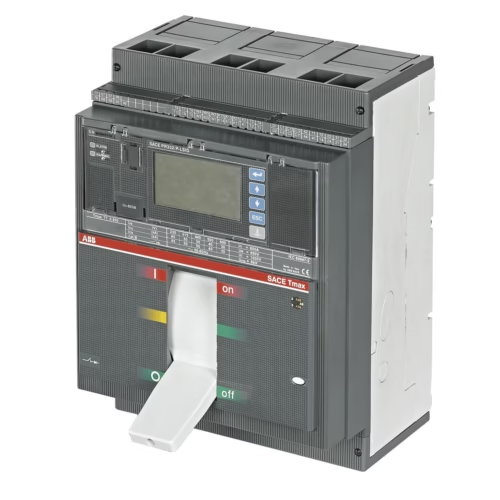
ABB T7 MCCB 4P 1250AMP 70kA
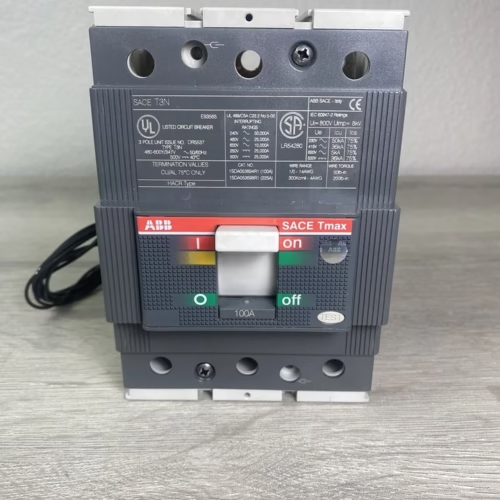
ABB TMAX T3N100TW S4 -100A 3Pole MCCB
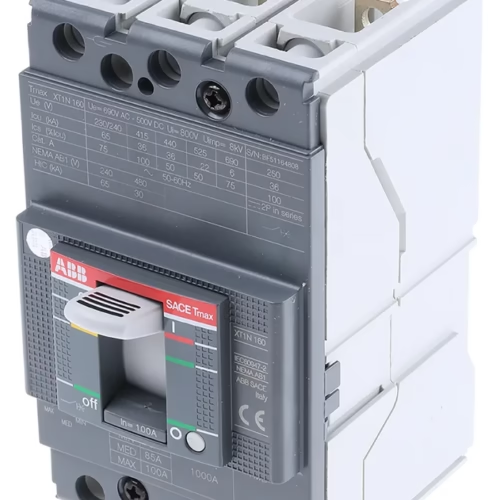
ABB Tmax XT1N | MCCB 3-Pole 100A, 36 kA
Original price was: ر.ع.38.500.ر.ع.37.900Current price is: ر.ع.37.900.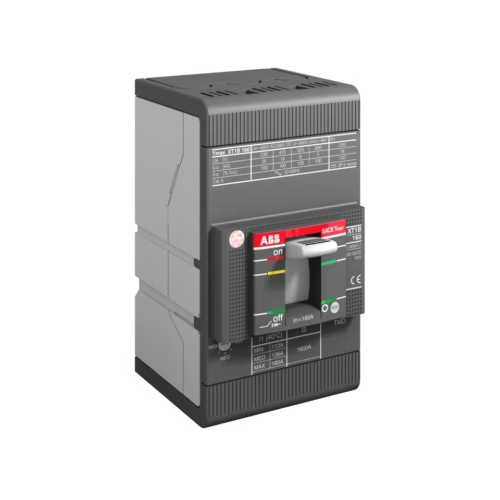
ABB TMAX XT1N 160A Thermomagnetic Release
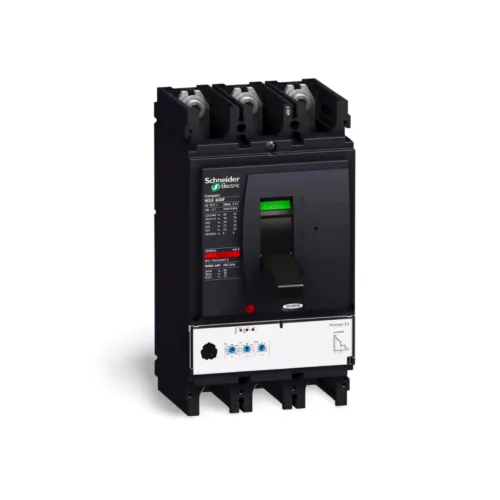
MCCB | NSX400F LV432676 (Schneider)
Original price was: ر.ع.245.000.ر.ع.233.000Current price is: ر.ع.233.000.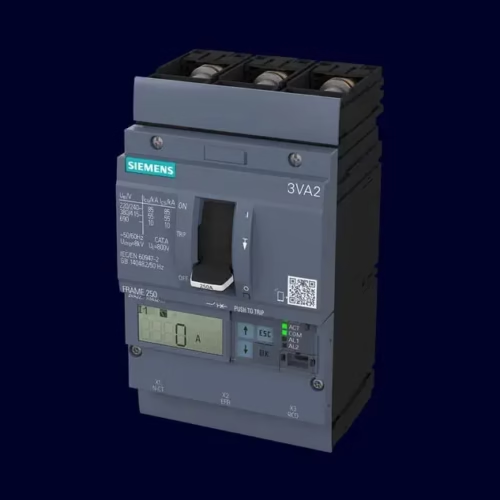
Siemens 3V MCCB | 25A 10kA 400V AC